
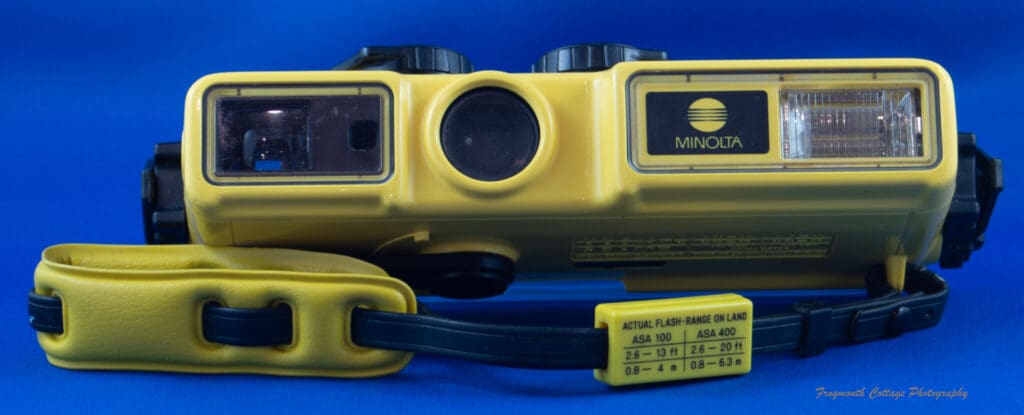
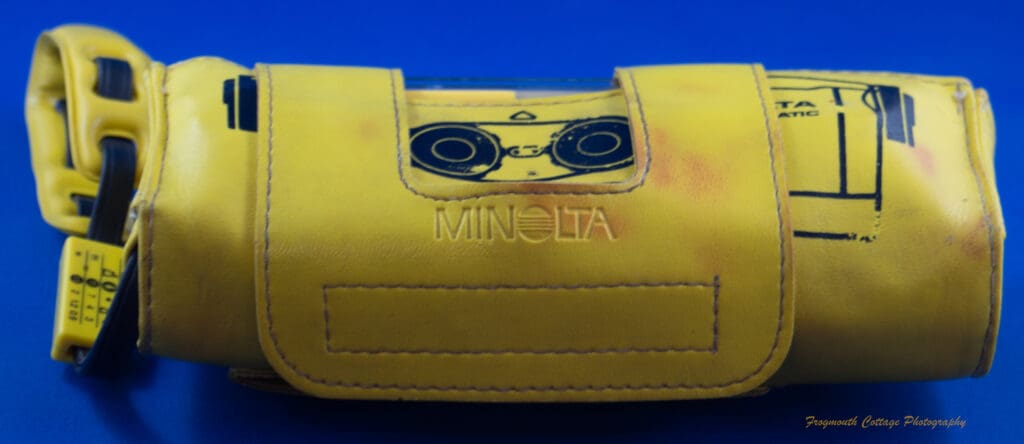
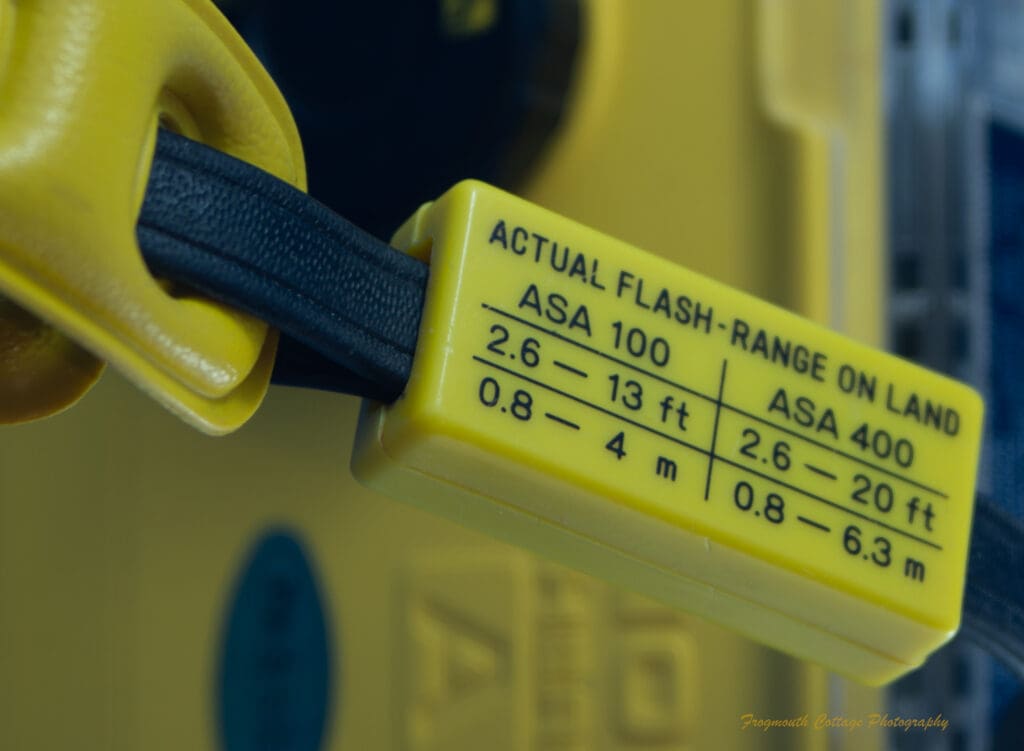
The Minolta Weathermatic A is one of a series of bright yellow underwater cameras produced by Minolta in the 1980s. The “A”model takes 110 film. It’s an all weather camera, described by Minolta as “the ideal do-anything, go-anywhere photographic traveling companion. It is just as at home in a backpack on top of a mountain or skiing down one as it is at the beach or around the pool. Its rugged watertight construction and 110 format conveniences, such as drop-in cartridge film loading, built-in electronic flash, and compact size makes taking quality photos simple and easy in even the most adverse conditions.” It’s waterproof to 5 metres, has a wrist strap and chunky dials and levers that are easy to use underwater, and comes with a wrap-around yellow case with a belt loop. Key information about flash distance and focus distance are written on both the strap and the camera. It’s a very odd camera to look at, and awkward to use on land, but get it into the water and it’s really well designed.
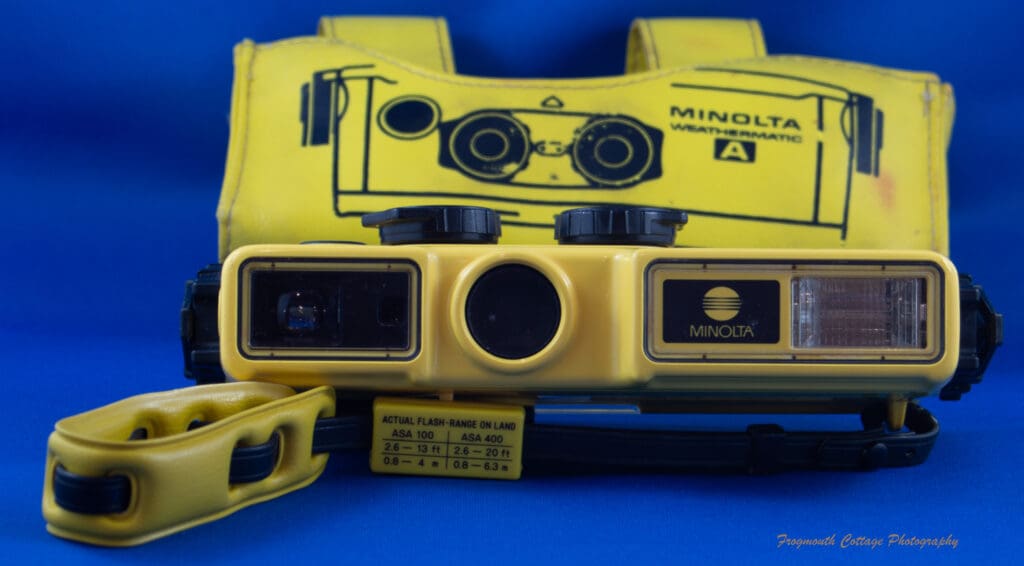
ACTUAL FLASH RANGE – ON LAND
| ASA 100 | ASA 400 |
| 2.6 – 13ft | 2.6 – 20ft |
| 0.8 – 4m | 0.8 – 6.3m |
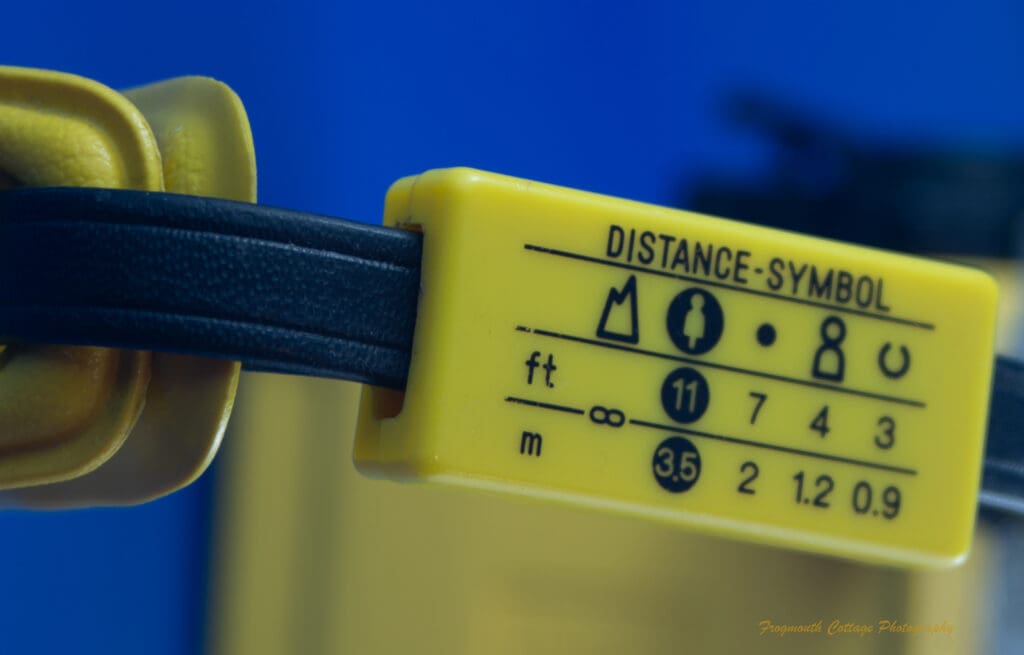
DISTANCE – SYMBOL
| Symbol | Mountain | Full Person | • | Half Person | Open circle |
| ft | ∞ | 11 | 7 | 4 | 3 |
| m | ∞ | 3.5 | 2 | 1.2 | 0.9 |

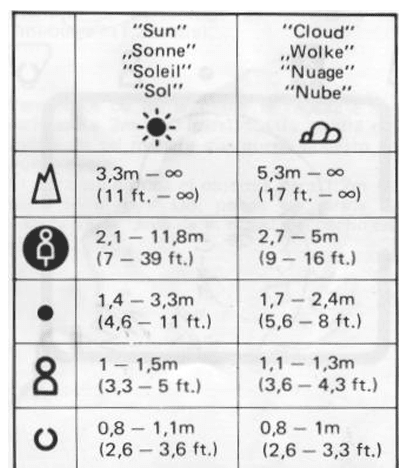
The manual provides the following depth of field table.
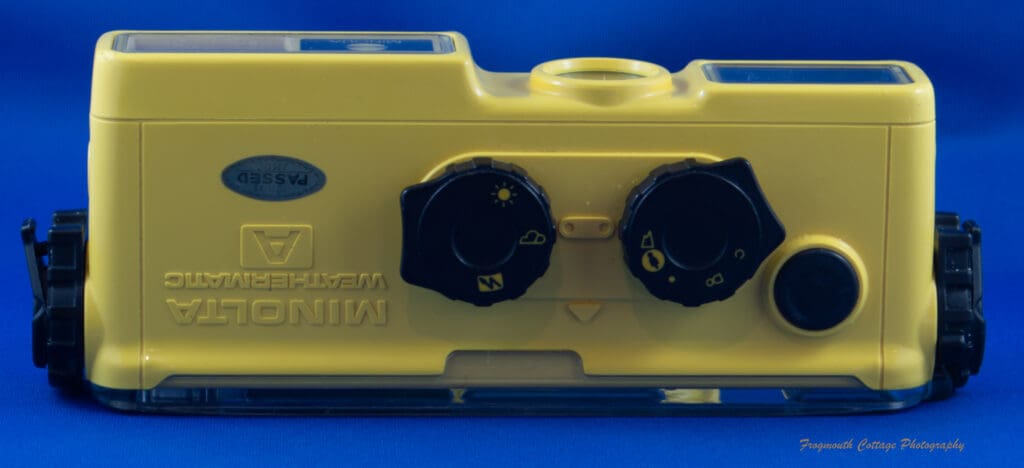
The large controls are very simple to use, especially underwater. On the top of the camera are two dials, one for focusing with symbols to indicate distance, the other has two weather symbols for sun and cloud and the flash symbol, these control the aperture. The aperture knob can be set to an intermediate position between full sun or cloud, while the flash setting changes the aperture with the focus setting – as the focus is set closer, the aperture reduces. The distance symbols are also displayed within the viewfinder, with the selected symbol highlighted by a red indicator above it.
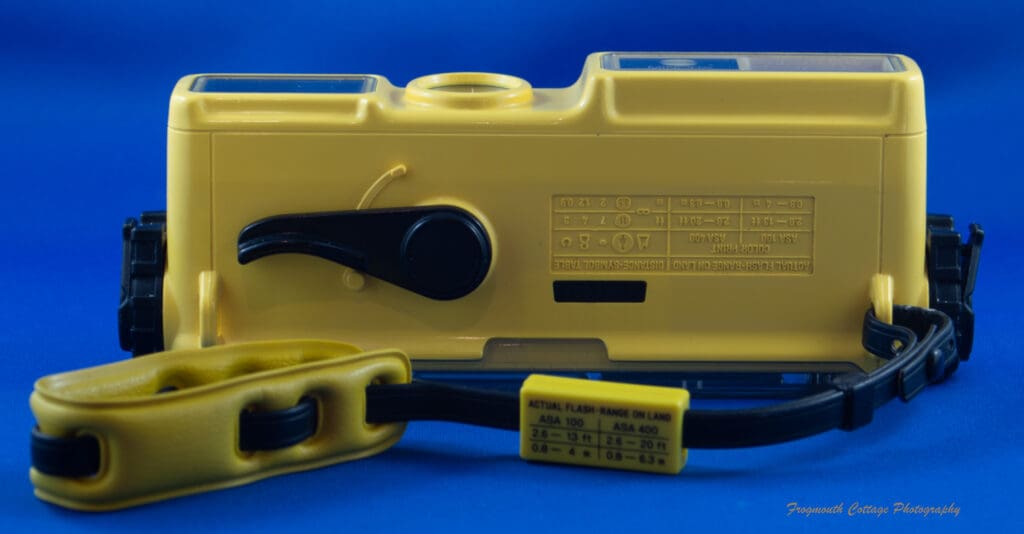
The shutter button, a large rubberised pad, is also positioned on top just above the view finder. On the underside of the camera is the frame advance lever, also large and chunky. Slightly depressing the shutter button will result in a red light in the viewfinder if there is insufficient light. Shutter speed is fixed at 1/200s. The lens is a Minolta 26mm f/3.5, with an angle of view: 45° (34° under water). The light meter (for low light indication) and the flash are both powered by a single AA battery. Taking photos doesn’t require a battery as the shutter is mechanical, so if they are flat or not operational the camera can still be used manually.
The camera back has an o-ring and two locks on the side to make it waterproof. The locks have clips that need to be lifted before each lock can be rotated in opposite directions. The back is tethered to the camera, so that when it is removed the back doesn’t get dropped or lost. Underneath the back are the compartments for the film and battery.
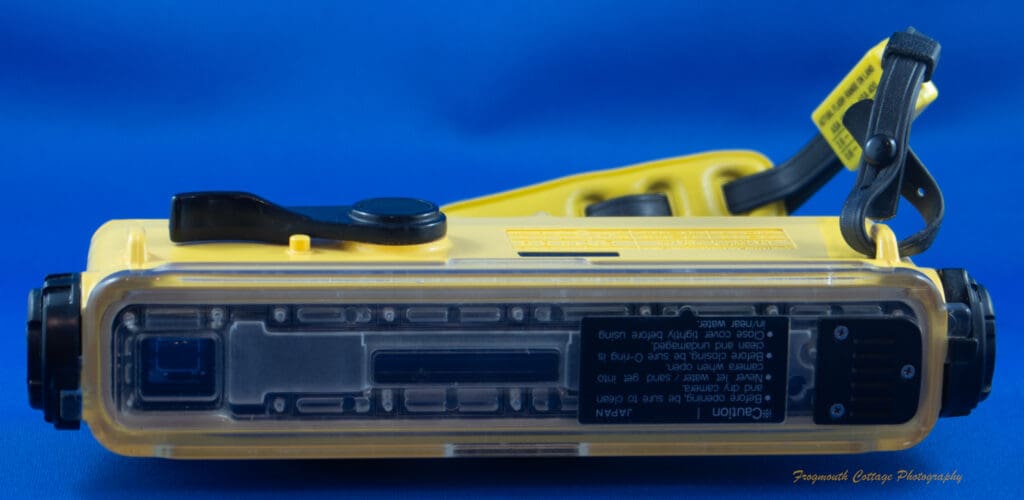
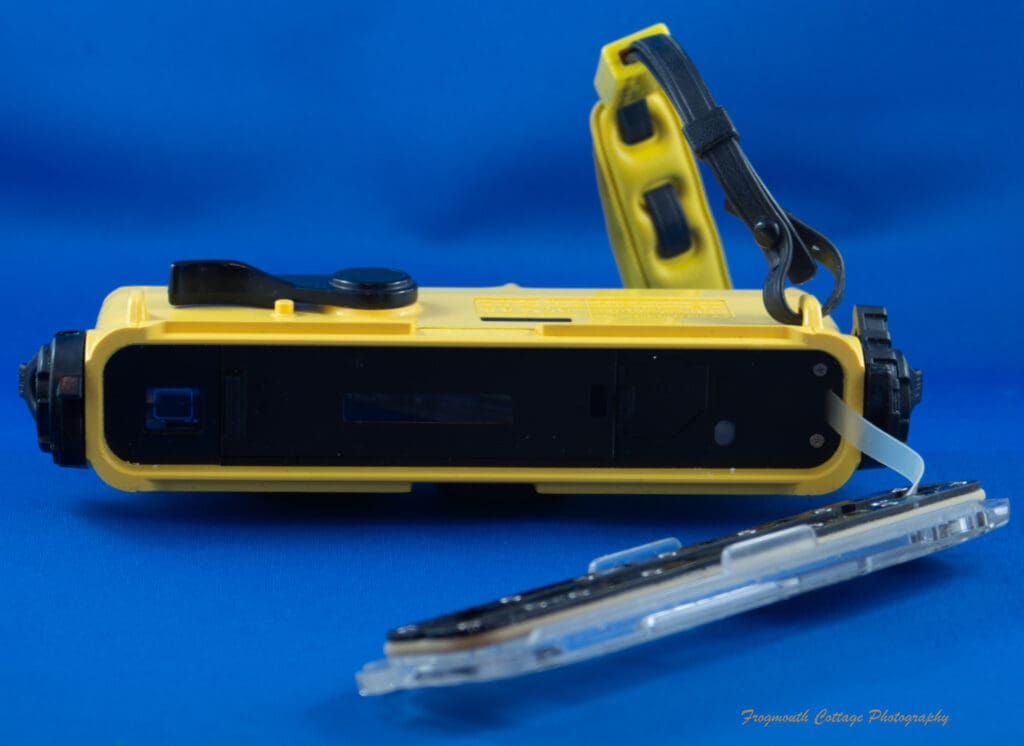
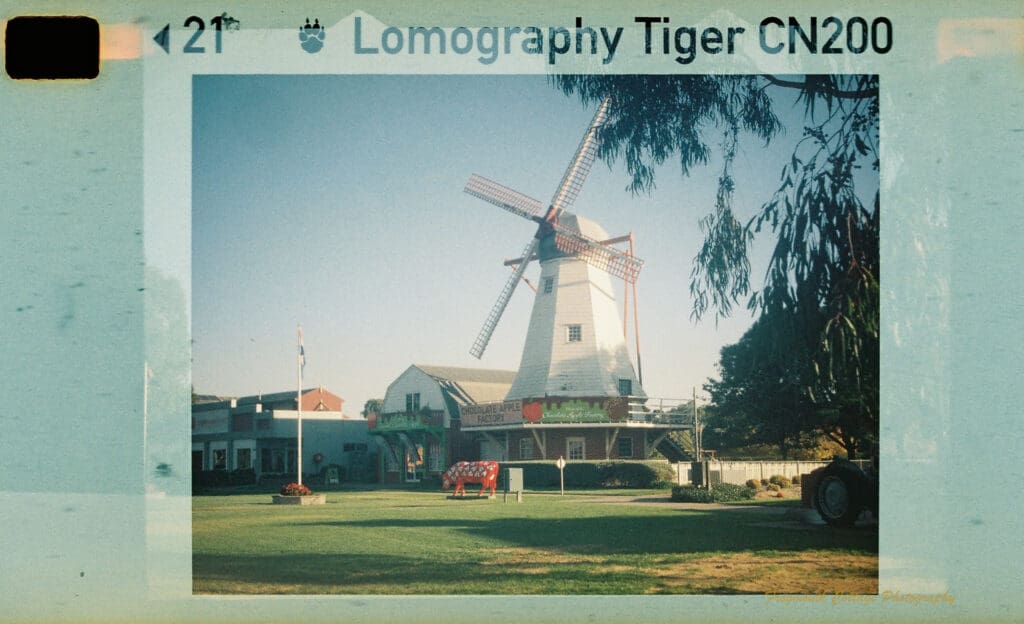
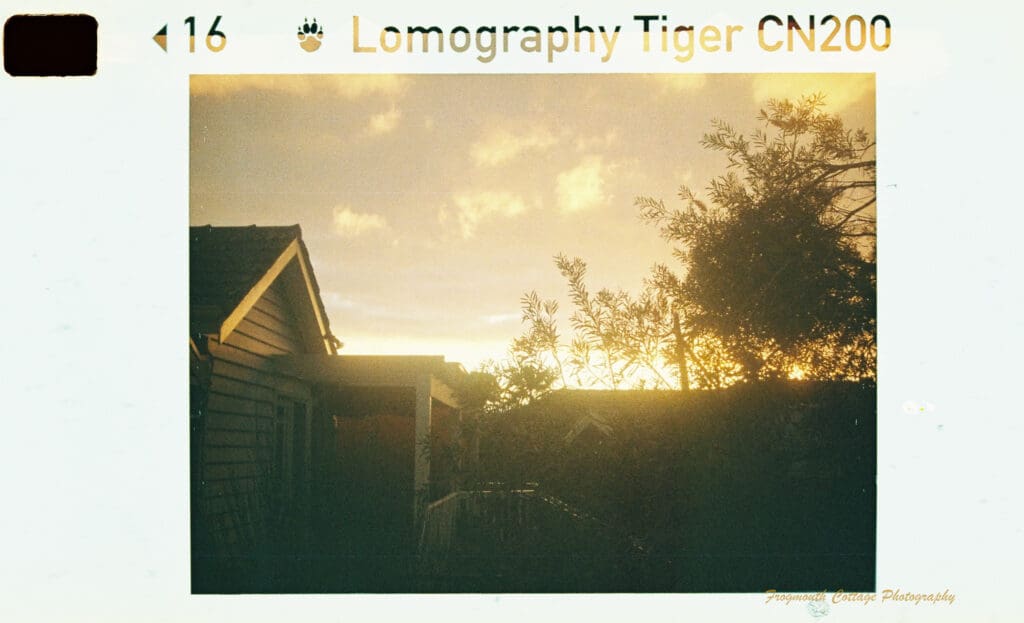
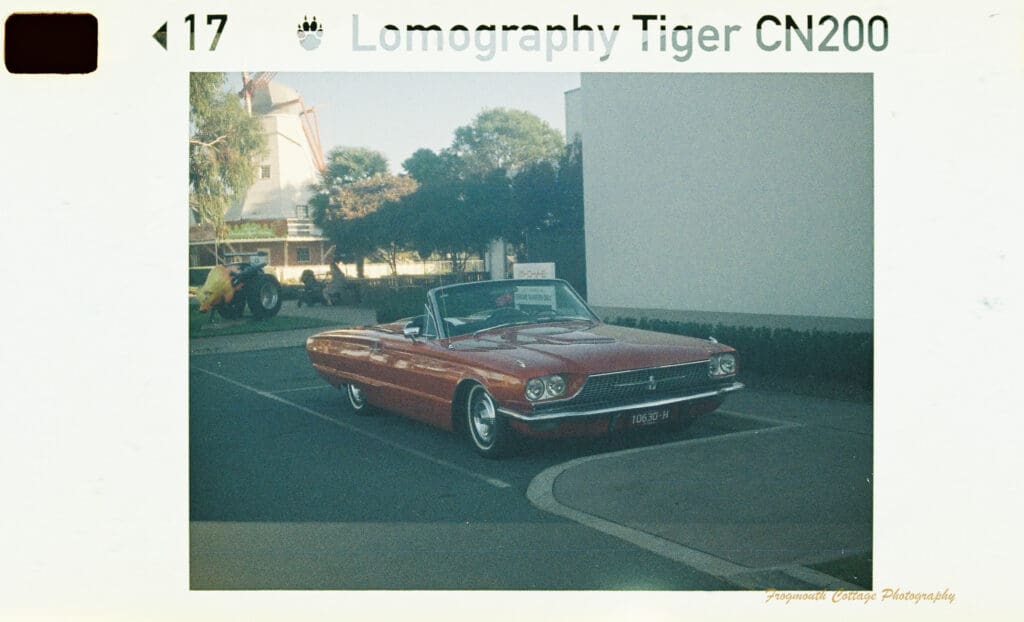
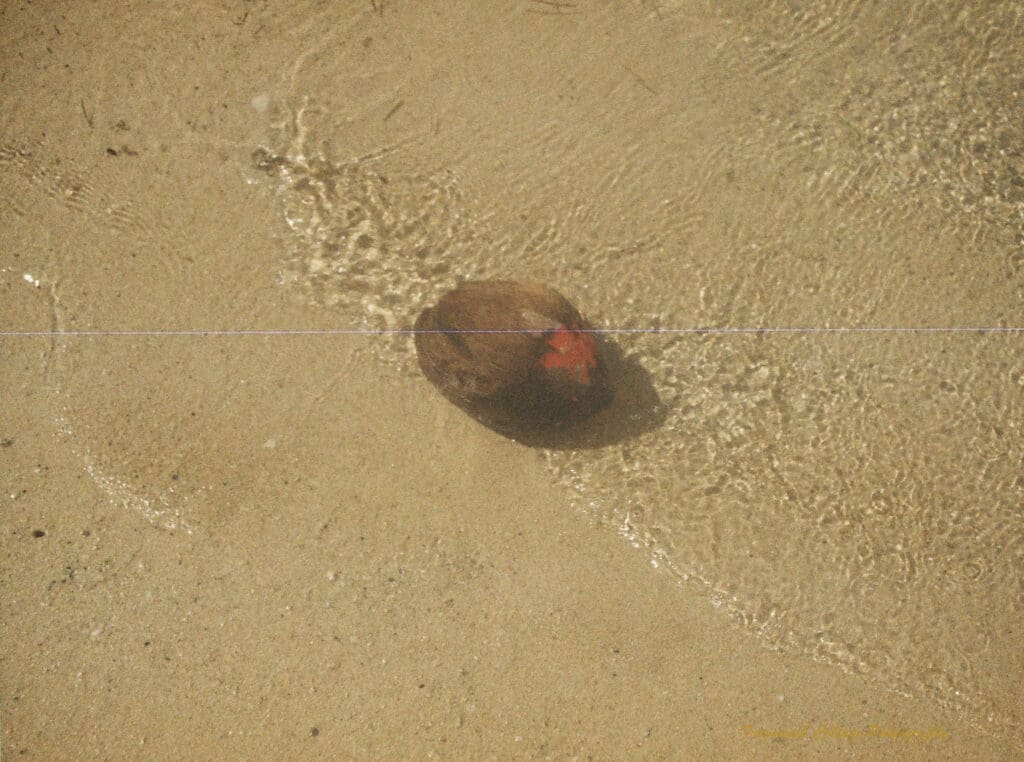
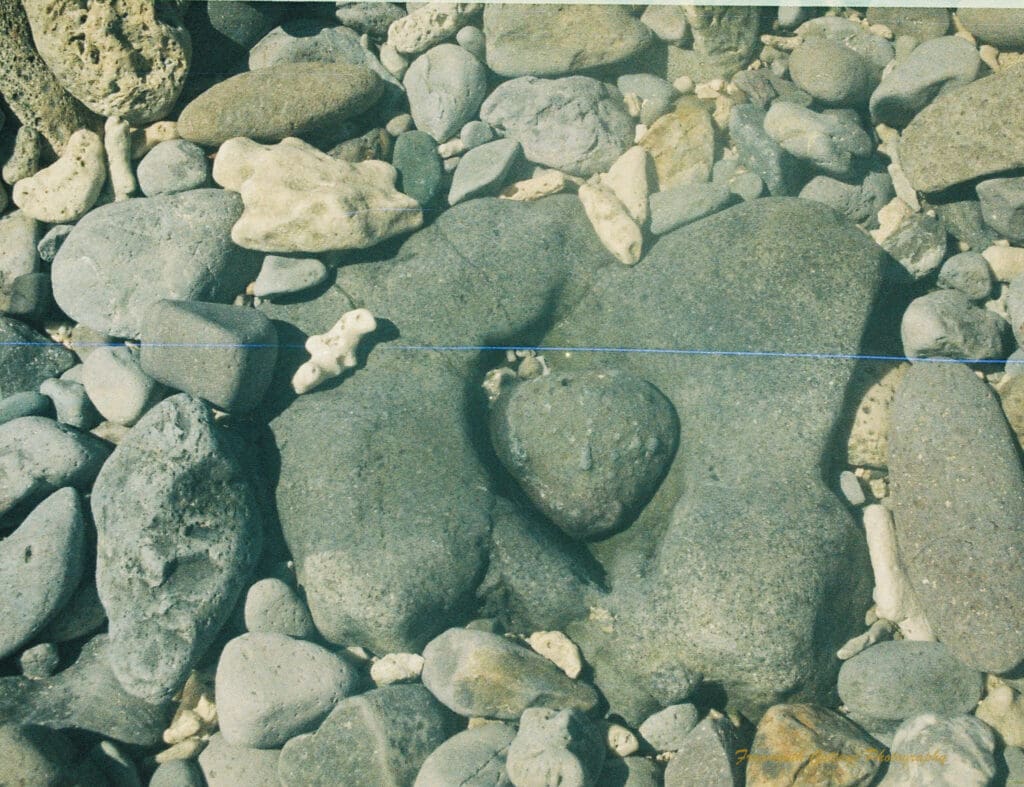
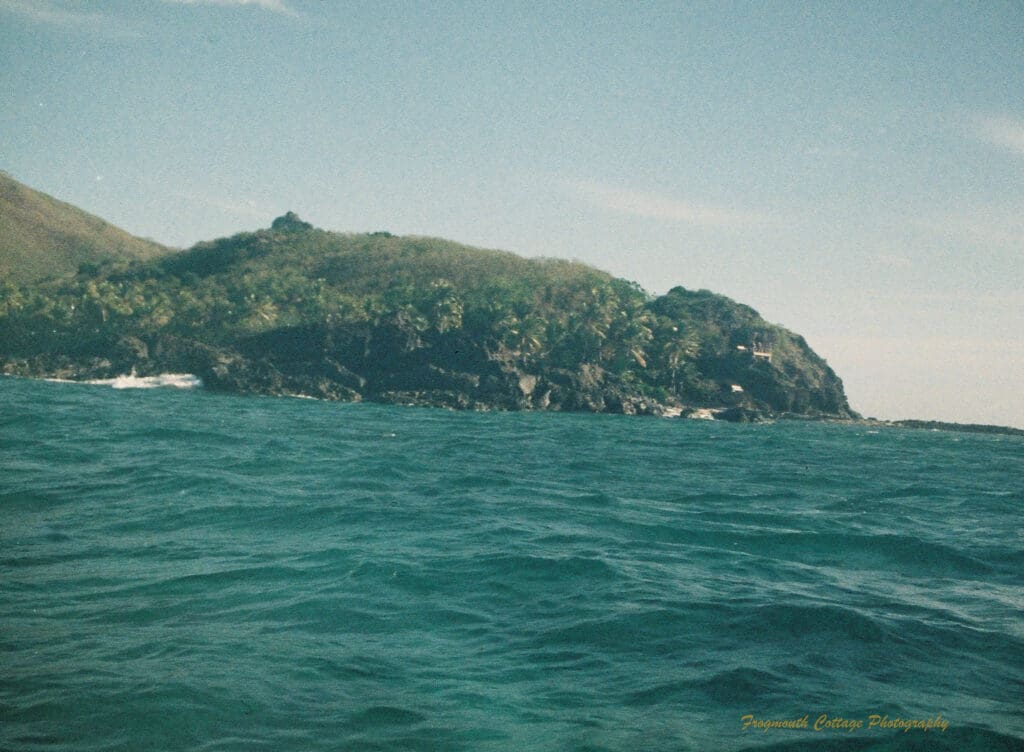
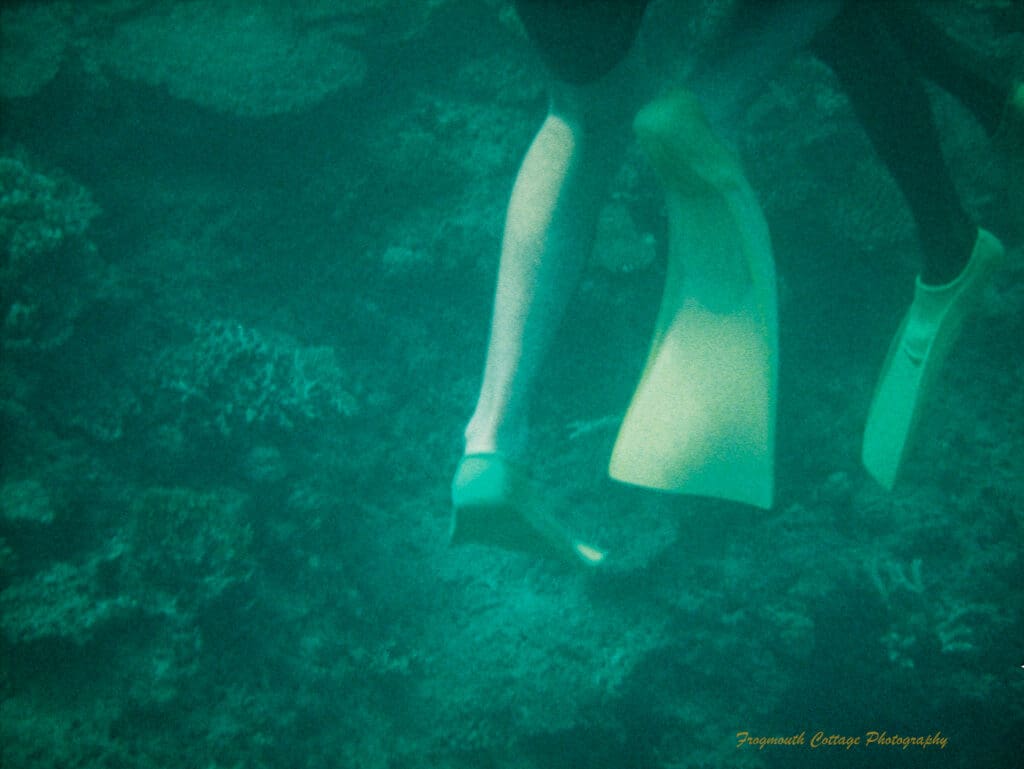
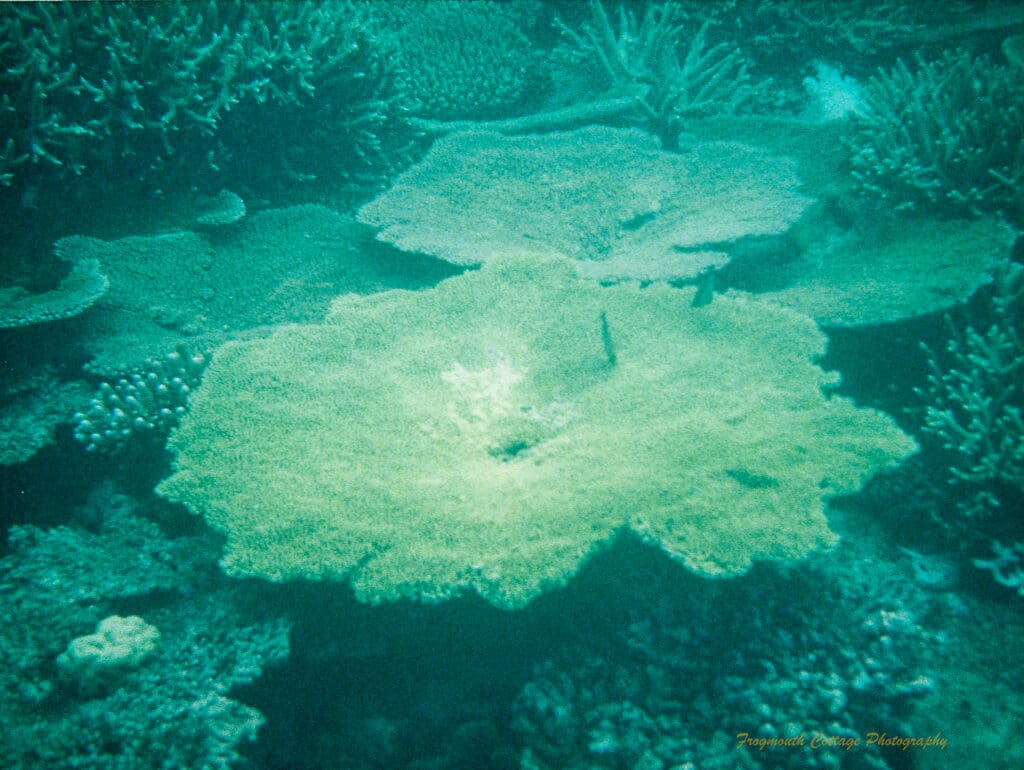
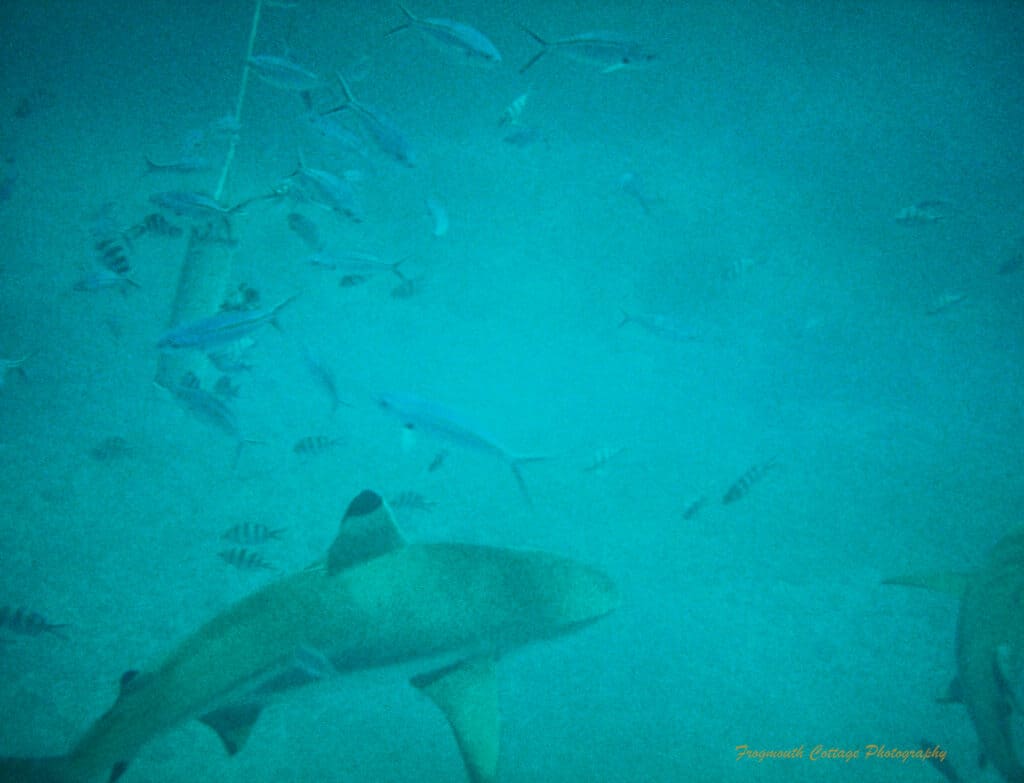
The first time I took this camera out was on land. It was very awkward to use and I took a lot of photos of my fingers, particularly when taking photos in portrait. It does take a little getting used to. After testing it’s waterproofness in a sink of water, I brought the camera on holiday with me to Fiji and took it snorkeling. Underwater the camera was much easier to use. The chunkiness and black and yellow colours really came into their own.
References:
- www.butkus.org/chinon/minolta/minolta_weathermatic/minolta_weathermatic_a.pdf
- https://photo-analogue.blogspot.com/2018/02/minolta-weathermatic-a.html
- https://www.aperturepreview.com/minolta-weathermatic-a
- https://filmphotography.eu/en/minolta-weathermatic-a/
- http://camera-wiki.org/wiki/Minolta_Weathermatic-A