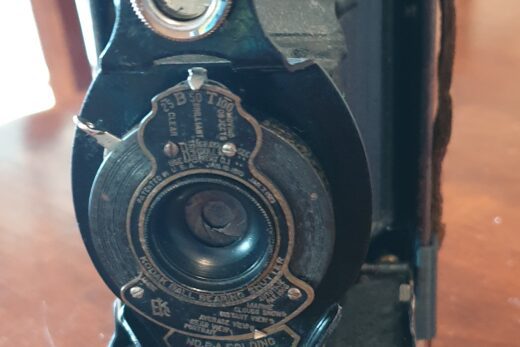
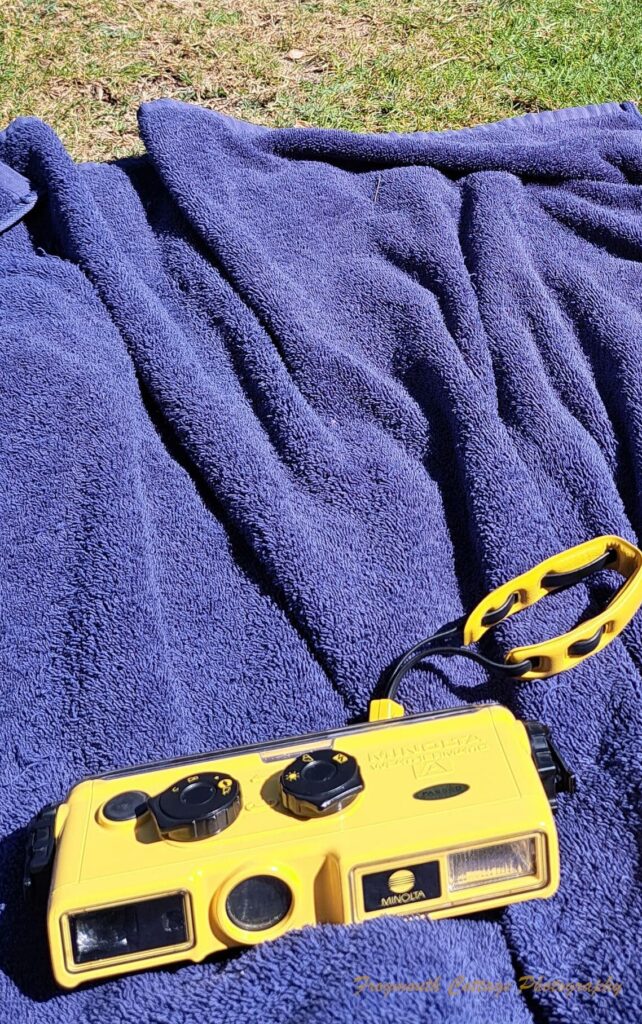
I found this Minolta Weathermatic A in a box of old photographic “stuff” I acquired. The batteries were still inside and totally corroded, so I didn’t hold out much hope that it would work. But once I got the batteries out, the battery compartment looked fine. After a cleanup of the terminals and putting in some fresh batteries, the light meter was working. Unfortunately I couldn’t get the flash to work, but that didn’t make the camera unusuable. It’s a very odd camera to look at, and awkward to use on land, but get it into the water and it’s really well designed. The large controls are very simple to use, especially underwater. Taking photos doesn’t require a battery as the shutter is mechanical, so if the batteries are flat or not operational the camera can still be used manually.
The Weathermatic A is one of a series of bright yellow underwater cameras produced by Minolta in the 1980s. The “A”model takes 110 film. It’s an all weather camera, described by Minolta as “the ideal do-anything, go-anywhere photographic traveling companion. It is just as at home in a backpack on top of a mountain or skiing down one as it is at the beach or around the pool. Its rugged watertight construction and 110 format conveniences, such as drop-in cartridge film loading, built-in electronic flash, and compact size makes taking quality photos simple and easy in even the most adverse conditions.” It’s waterproof to 5 metres, has a wrist strap and chunky dials and levers that are easy to use underwater, and comes with a wrap-around yellow protective case. Key information about flash distance and focus distance are written on both the strap and the camera.
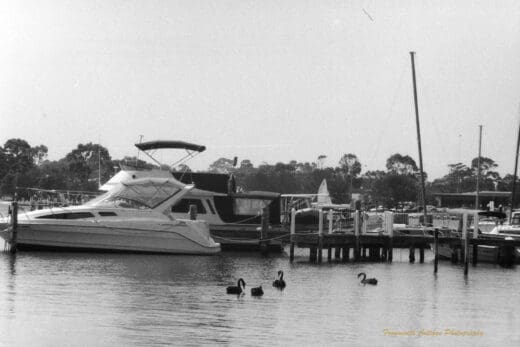
The first time I took this camera out was on land. It was very awkward to use and I took a lot of photos of my fingers, particularly when taking photos in portrait. It does take a little getting used to.
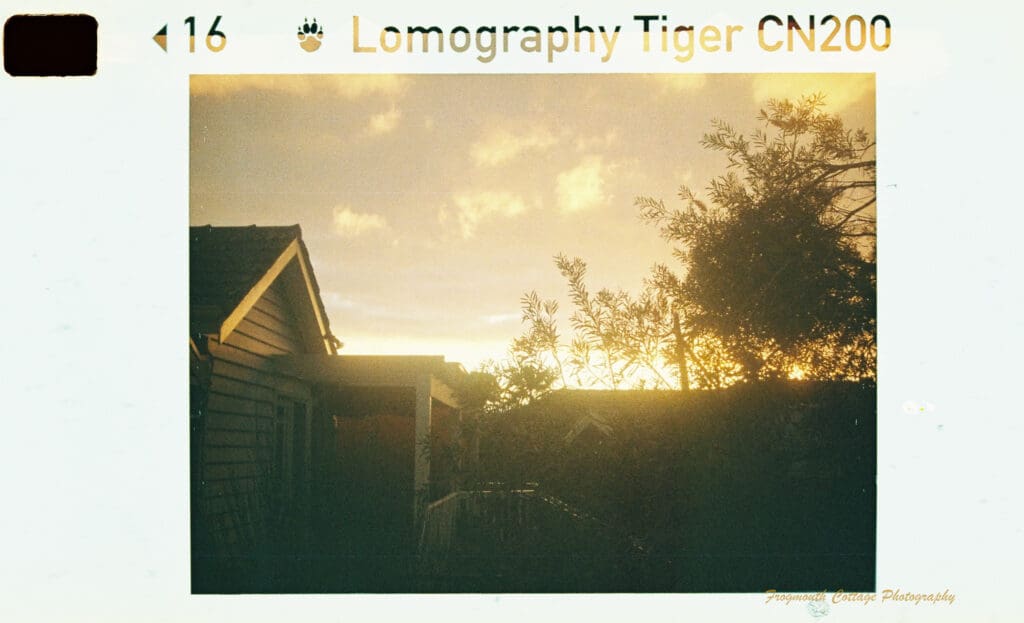
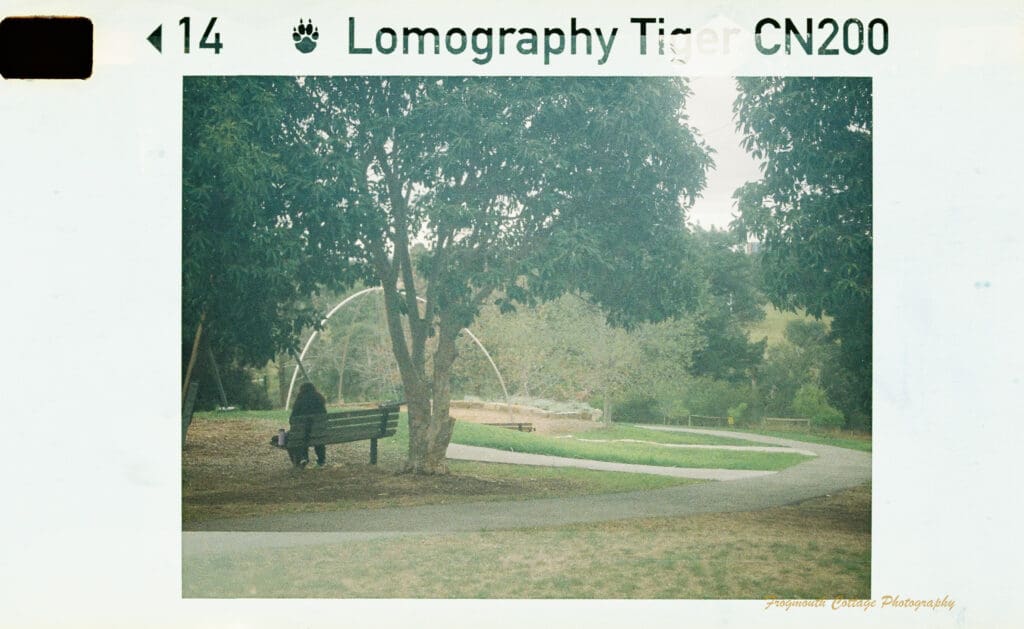
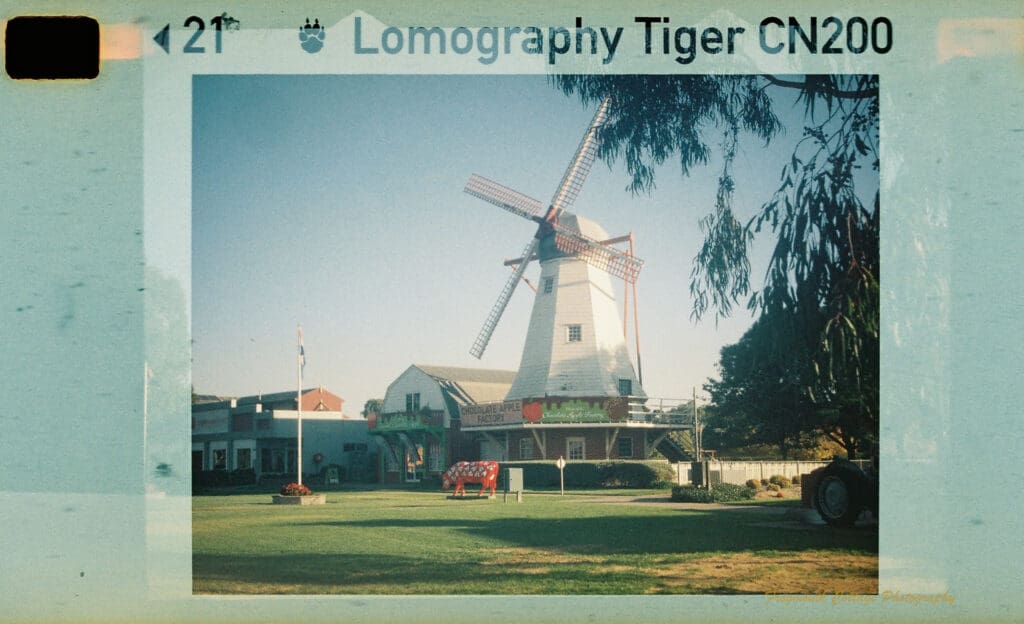
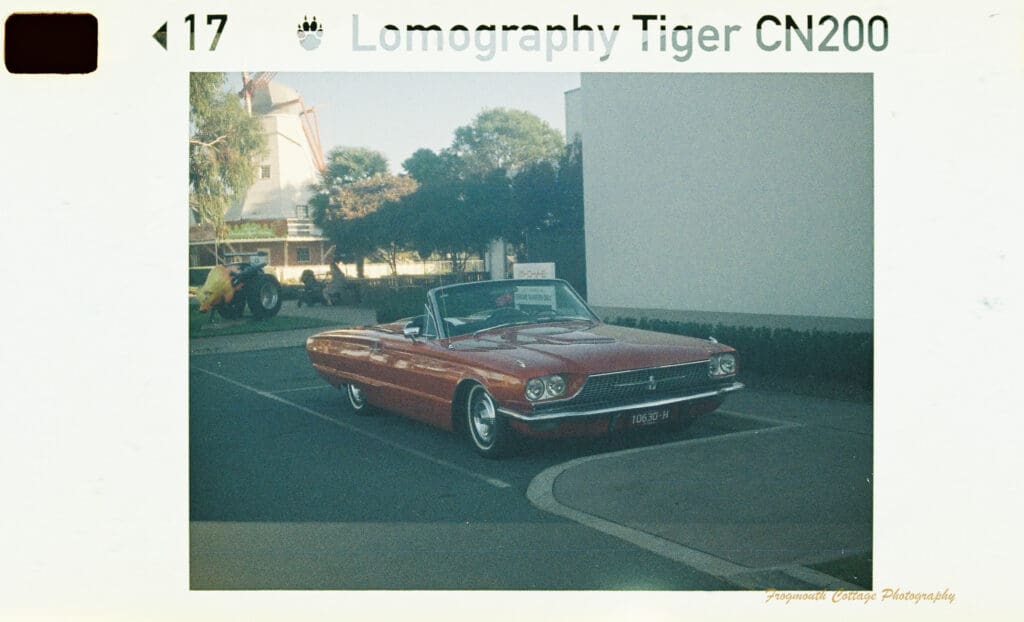
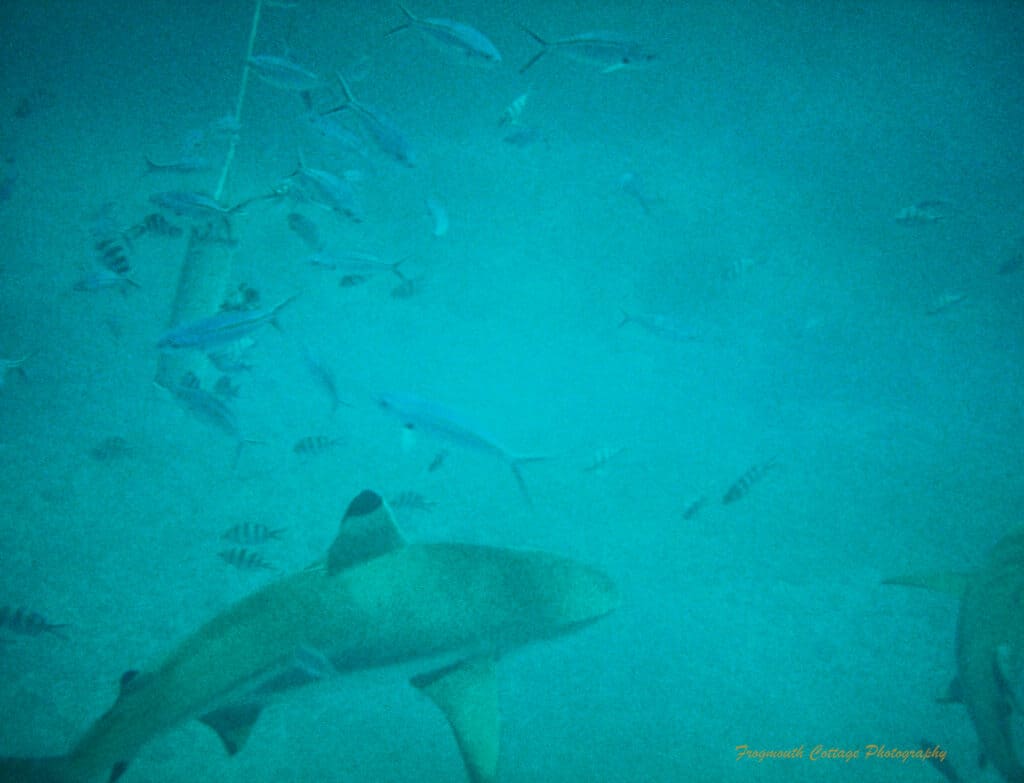
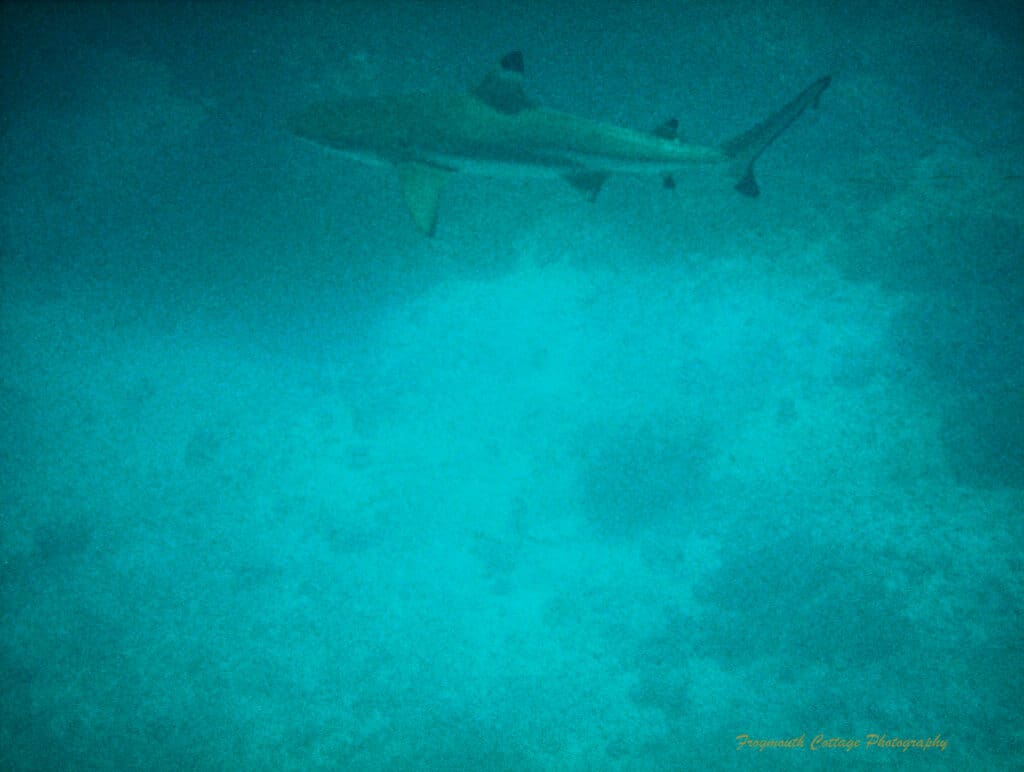
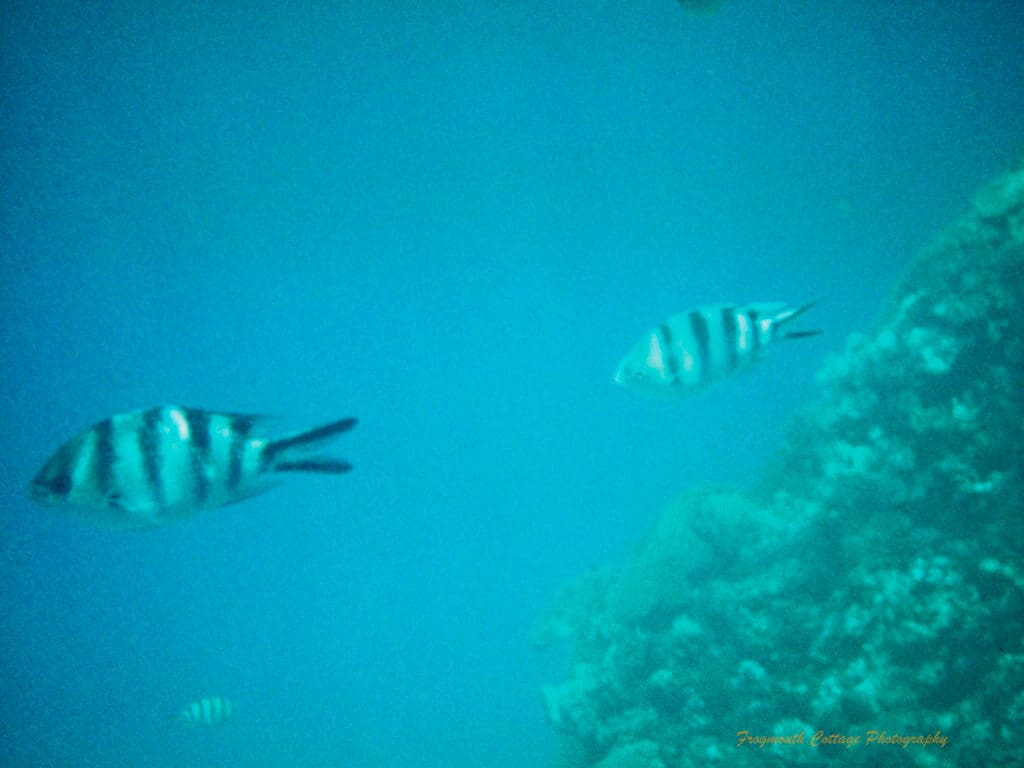
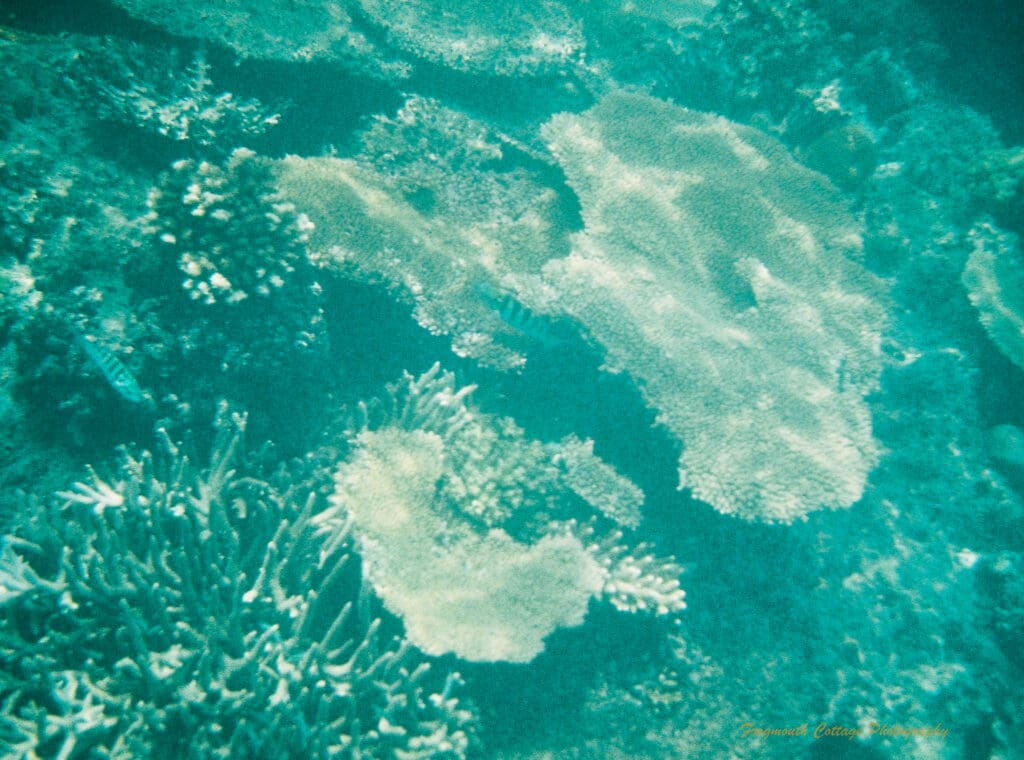
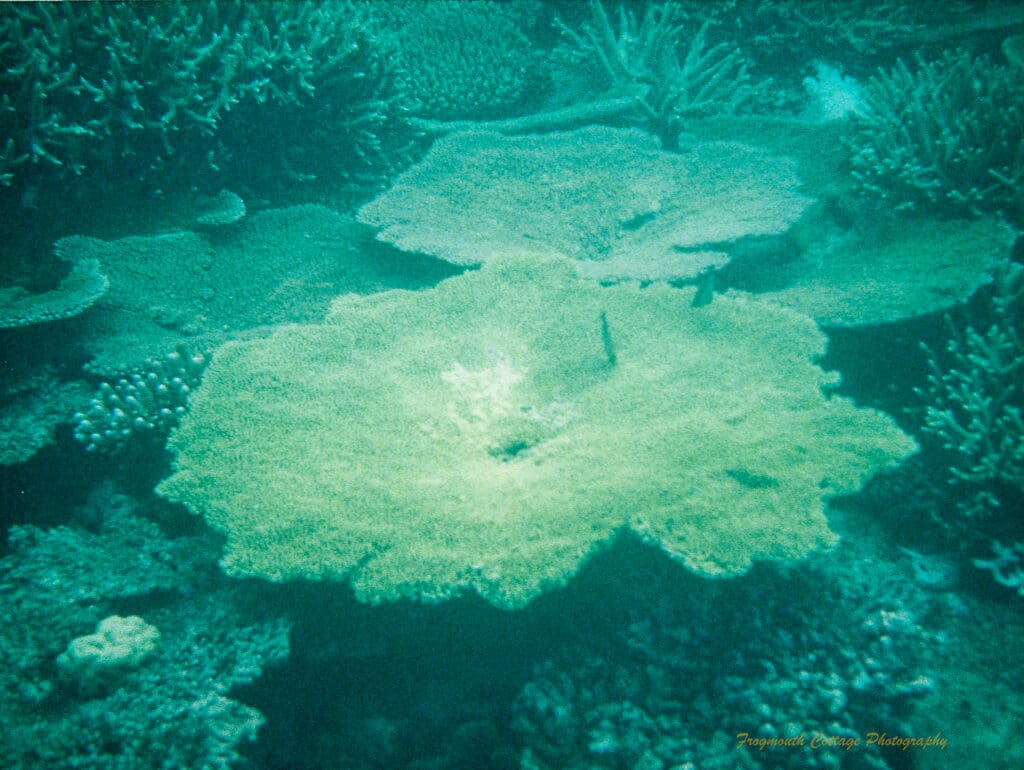
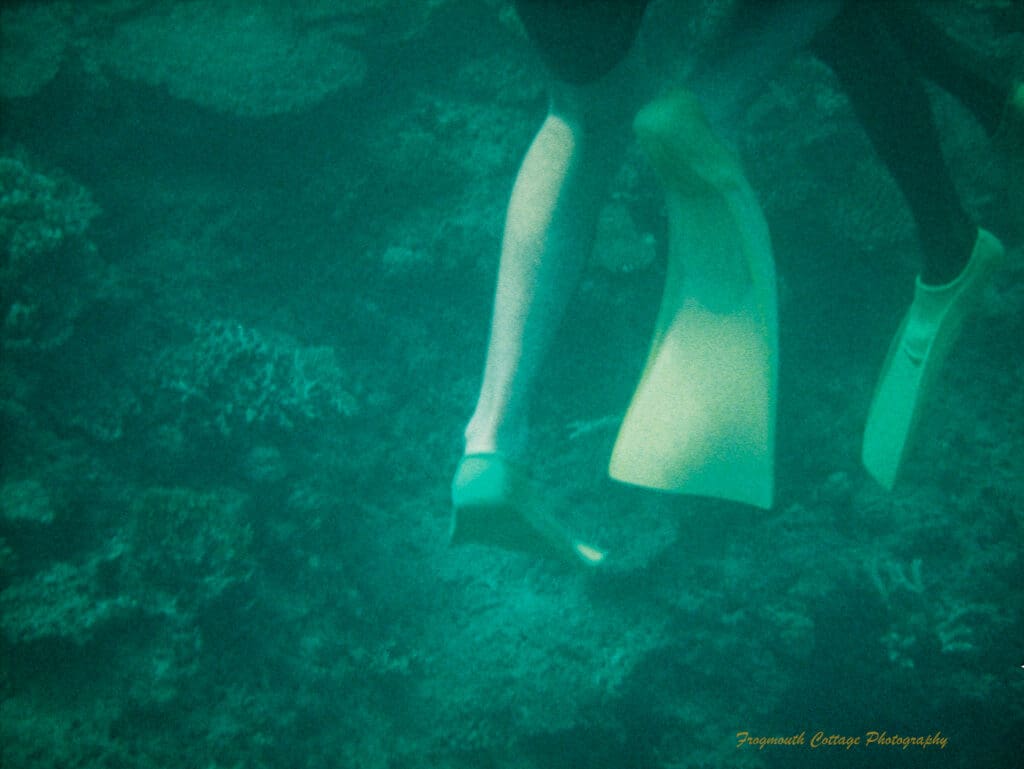
After testing it’s waterproofness in a sink of water, I brought the camera on holiday with me to Fiji and took it snorkeling. Underwater (or bouncing around on top in a life jacket in my case) the camera was much easier to use. The chunkiness and black and yellow colours really came into their own. No fingers were photographed this time, instead I managed to photograph sharks, coral, fish and my family. My land photos on the beach were much better as well. The hardest part about taking photos underwater was keeping the subject in the viewfinder long enough with all the bouncing around from the water. I preset both the aperture and distance before starting and tried to keep my photos to that depth of field.
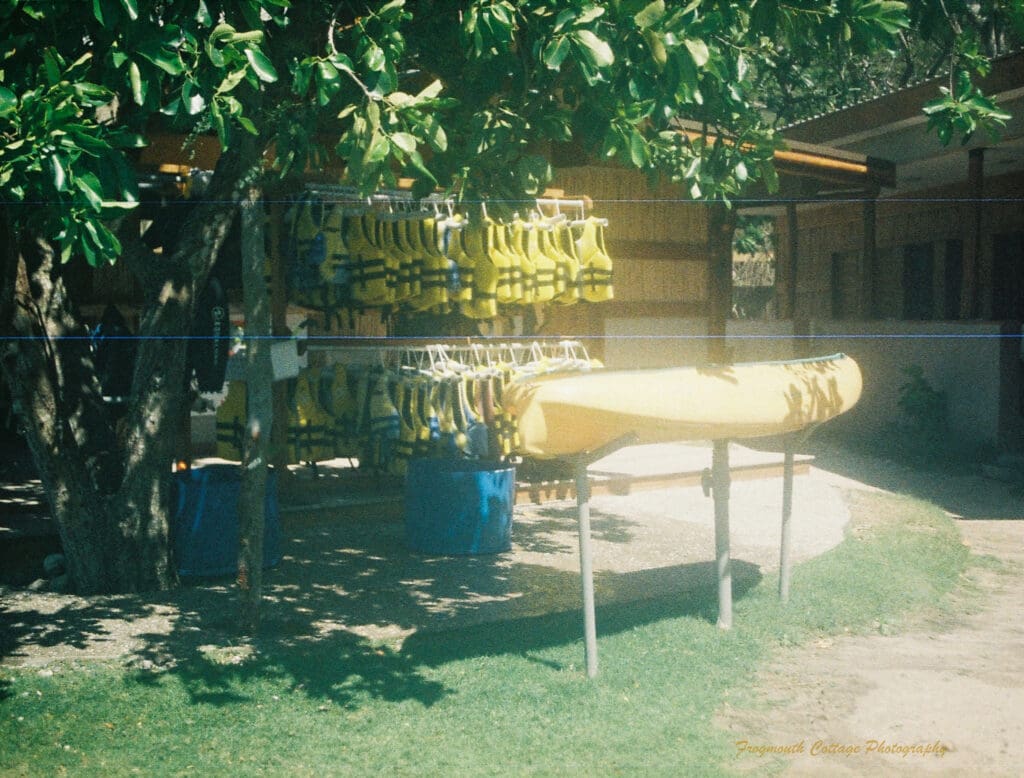
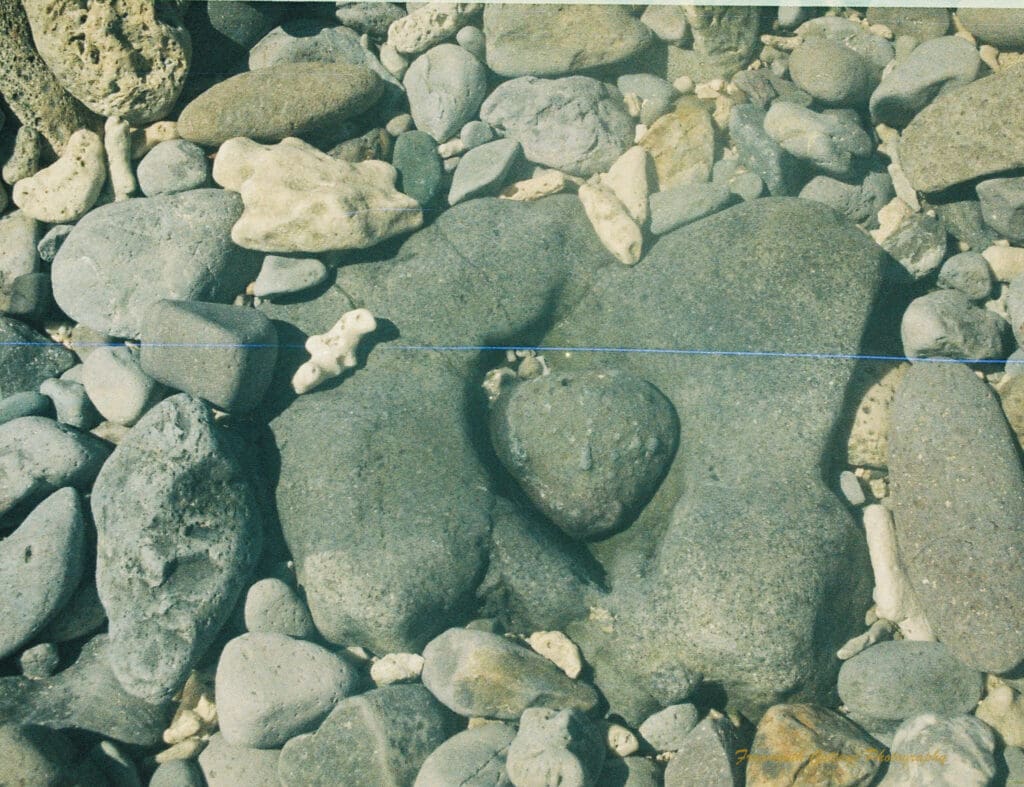
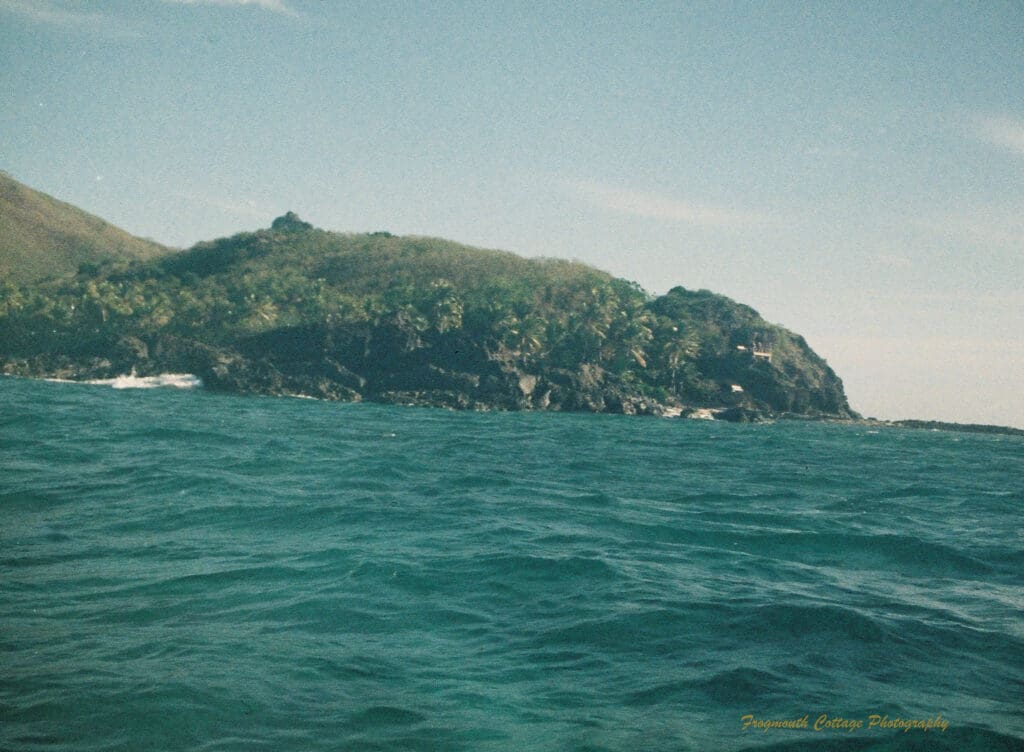
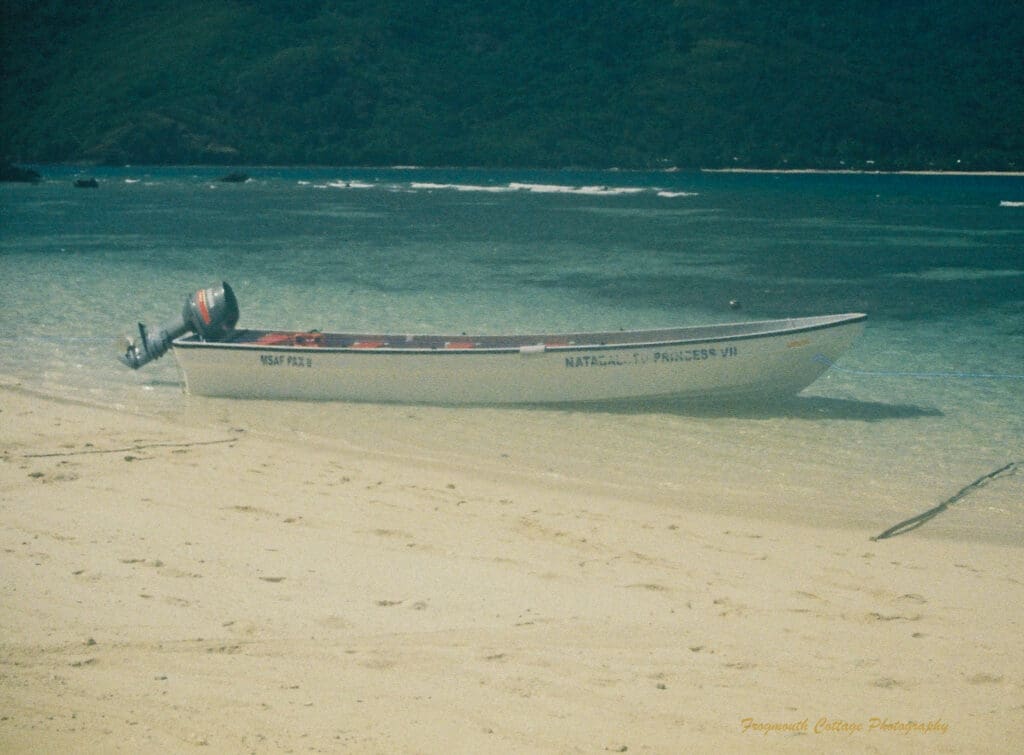
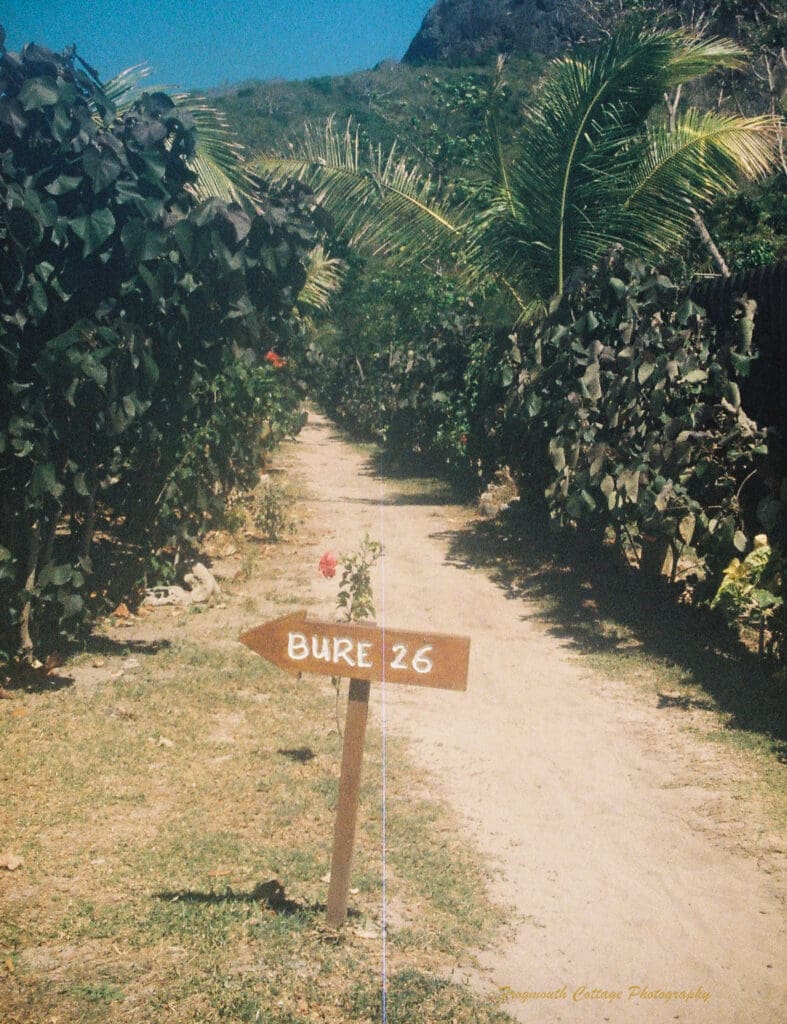
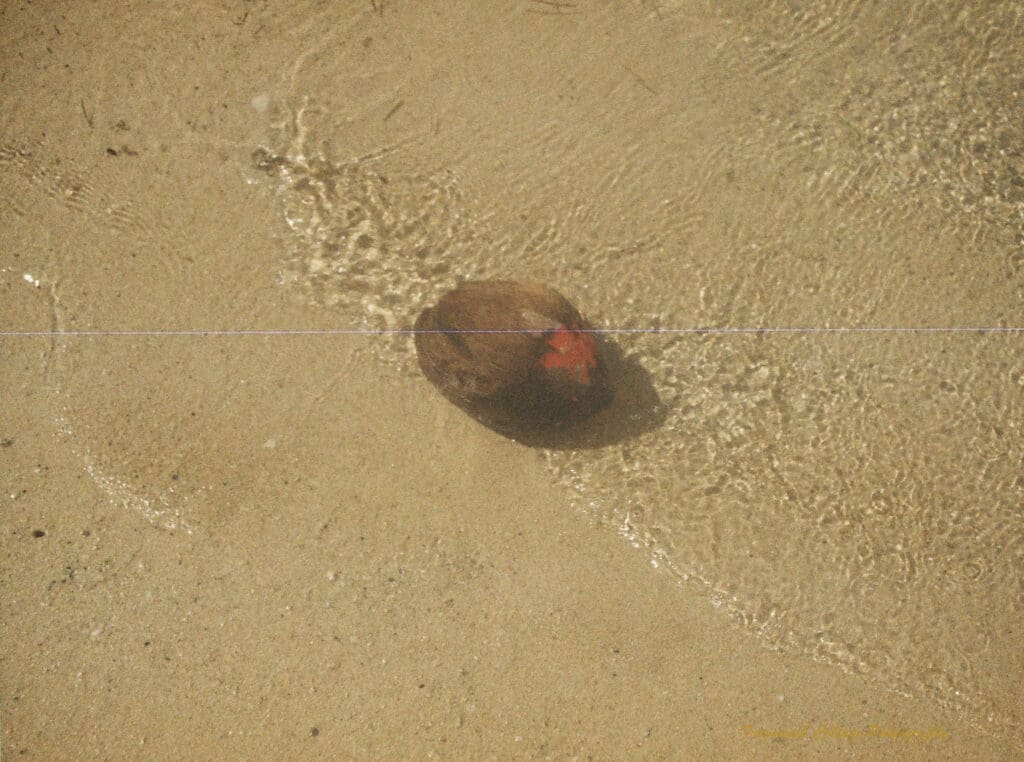
The blue lines through some of the images are an artefact of the lab scans.
The under water photos are definitely the best. All were taken on Lomography Tiger CN 200. I think this is where the camera really shines; some of the land based photos are good too, but the exposure is a lot harder to get right. Underwater I had the camera set to cloudy most of the time and this seemed to work even though the sun was constantly popping in and out of the clouds. On land I think the bright sun resulted in over exposure. All this aside, this camera will definitely be joining me on more beach holidays!